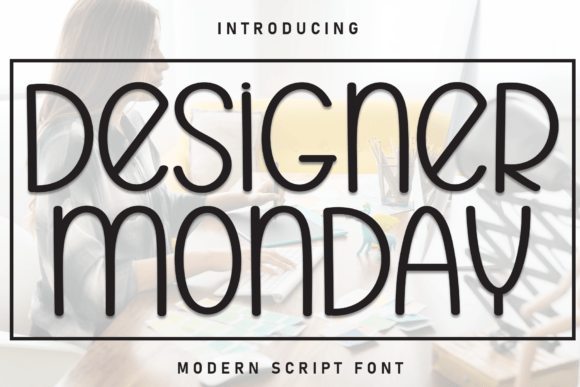
Designer Monday: A Handwritten Display Font for Small Business Branding
When you run a small business, every detail matters. From the color of your logo to the texture of your packaging, each element shapes how customers see you. Fonts are one of the most overlooked yet powerful tools in your branding kit. The right typeface can make your business feel approachable, professional, and memorable. That’s where Designer Monday comes in. This charming handwritten display font has a delightful, affable personality that suits all kinds of small businesses. It’s not just a pretty face—it’s a practical choice for creating consistent, recognizable brand materials.
Designer Monday is a handwritten font with a lively, playful feel. It’s not overly ornate or formal. Instead, it feels like a friend wrote a note just for you. That warmth is exactly what many small businesses need to connect with their audience. Whether you’re a bakery owner, a handmade soap maker, or a boutique clothing store, this font can help you communicate your brand’s personality without saying a word.
Why Small Businesses Need a Distinctive Display Font
As a small business owner, you’re competing with big brands that have massive budgets. Your advantage is personality. People buy from businesses they trust and like. A font like Designer Monday helps you stand out by giving your materials a unique, human touch. It’s a display font, meaning it’s designed to grab attention rather than be used for long paragraphs. Use it for headlines, logos, product names, and short quotes. It’s not meant for body text, but that’s exactly what makes it powerful for branding.
Consistency is key. When customers see the same font on your website, your packaging, and your social media, they start to recognize your brand. That recognition builds trust. Designer Monday is versatile enough to work across many touchpoints, from a logo design on your business card to a thank-you card tucked inside an order. It’s a premium font that feels custom-made for your brand, even though you can download and use it immediately.
Logos and Business Cards
Your logo is often the first thing people see. A handwritten font like Designer Monday gives your logo a friendly, approachable feel. If you run a café or a coaching business, this font can make your brand feel warm and inviting. Pair it with a simple icon or a clean symbol, and you have a memorable logo. On business cards, use Designer Monday for your business name and a clean sans serif font for contact details. This pairing keeps the card readable while still showing personality.
Product Labels and Packaging
Packaging is your silent salesperson. When a customer picks up a handmade candle or a jar of jam, the label matters. Designer Monday is perfect for product names, flavor descriptions, and short ingredient lists. For a handmade candle label, the font’s playful curves suggest natural ingredients and artisanal care. For beauty product packaging, it adds a touch of whimsy without looking cheap. Just keep the text size large enough to read—on small labels, test the font at different sizes to ensure it remains legible.
Menus, Flyers, and Signage
If you own a café or restaurant, your menu is a reflection of your vibe. Use Designer Monday for the menu title, section headers, or specials. It gives a hand-lettered feel that customers love. For flyers promoting a sale or event, the font works well as a headline. On signage, such as a welcome board or a price list, it adds character. Just remember that readability declines at very small sizes, so reserve this font for elements that are at least 18–24 points, depending on the medium.
Social Media Graphics and Website Banners
Instagram and Pinterest are visual platforms. A font like Designer Monday can make your posts pop. Use it for quotes, announcements, and product highlights. On a website banner, it can serve as a hero text that immediately communicates your brand’s personality. For social media graphics, pair it with a contrasting background color to make the text stand out. Keep in mind that mobile screens are small, so avoid using Designer Monday for long phrases—short headlines work best.
Readability and Practical Testing
Before you commit to using Designer Monday across your entire brand, test it in real-world scenarios. Print a small label, view it on a phone screen, and check how it looks on a website mockup. Handwritten fonts can sometimes lose legibility when scaled down or printed on rough paper. Designer Monday is fairly clear for a script font, but you should still test. For packaging, ask yourself: can a customer read the product name from three feet away? For social media, does the text hold up as a thumbnail? Adjust the size and spacing to ensure clarity.
In general, handwritten display fonts are best used as accent or headline fonts. They’re not designed for body copy. If you need to include longer descriptions, use a clean sans serif font like Open Sans or Montserrat. This pairing creates a nice contrast: the playful handwriting grabs attention, and the simple sans serif provides readability. Alternatively, a serif font like Lora or Merriweather can give a more classic, structured feel alongside Designer Monday’s casual style.
Font Pairing Ideas for a Cohesive Brand Identity
Building a consistent brand identity means choosing fonts that complement each other. Designer Monday is a handwritten font with a lot of personality, so it needs a neutral partner. Here are a few simple pairings to try:
- Designer Monday + a clean sans serif font (like Poppins or Raleway) – great for modern, approachable brands.
- Designer Monday + a classic serif font (like Playfair Display or Cormorant Garamond) – works well for boutique or luxury products.
- Designer Monday + a simple script font – only if you have a very casual brand, and use them sparingly to avoid clutter.
When pairing, use Designer Monday for headings, logos, and short phrases. Use the other font for body text, captions, and contact information. This hierarchy keeps your materials readable while still giving them a distinct personality.
Commercial Licensing: What You Need to Know
As a small business owner, you must pay attention to font licensing. Using a free font for personal projects is fine, but when you use it on products, packaging, templates, or client work, you often need a commercial license. Designer Monday is a commercial font that likely requires a license for business use. Always check the terms before you start using it on your labels, website, or merchandise. Some fonts allow unlimited use, while others have restrictions on the number of impressions or the type of project. Investing in a proper license protects your business from legal issues and supports the font designer.
Making Your Brand More Professional and Recognizable
Small businesses often struggle with looking amateurish. One of the easiest fixes is to use a consistent, well-chosen font across all materials. When you use Designer Monday for your logo design, your packaging design, and your social media graphics, you create a cohesive look that signals professionalism. Customers will start to associate that font with your brand. Over time, they’ll recognize it even without seeing your logo. That’s the power of modern typography in branding.
For example, a bakery brand could use Designer Monday for the word “Bakery” on the storefront, the name of each pastry on a label, and the headline on an Instagram post. A handmade soap seller could use it for product names like “Lavender Dream” and on a thank-you card included in the package. A coaching business could use it for the title of a free guide or a banner on their website. In each case, the font adds a human touch that sets the business apart from corporate competitors.
Where Designer Monday Fits Best in Your Brand Toolkit
Think of Designer Monday as a star player, not a utility player. Use it for high-impact moments where you want to convey warmth, fun, or creativity. It’s ideal for:
- Logo or brand mark
- Product names on labels
- Menu headers and specials
- Social media quote graphics
- Website hero sections
- Invitation or greeting card text
- Stickers and packaging highlights
Avoid using it for long paragraphs, small print, or important legal information. In those cases, readability suffers. Reserve it for the parts of your brand that need to be memorable and emotional.
Testing Before You Commit
Before you finalize your brand identity, create a few mockups. Print a business card, design a product label, and post a social media graphic. Look at them side by side. Does the font feel consistent? Is it legible at the sizes you need? Does it match the personality you want? If you’re unsure, ask a friend or customer for feedback. Sometimes a font that looks great on screen doesn’t work on paper, or vice versa. Designer Monday is reliable, but every brand is different.
Also consider the color scheme. A handwritten font like Designer Monday pairs well with soft, muted colors or bright, cheerful tones. Avoid placing it on busy backgrounds where the text gets lost. White space is your friend when using a decorative font.
Final Practical Advice for Small Business Owners
Building a brand takes time, and choosing the right font is a step that pays off. Designer Monday gives you a creative font that feels personal without being unprofessional. It’s a display font that can elevate your logo design, packaging design, and web design when used correctly. Pair it with a clean sans serif or a readable serif for a balanced look. Test it in real settings. And always check the commercial font licensing before using it on products you sell.
With Designer Monday, your small business can look more consistent, professional, and recognizable across every customer touchpoint. It’s not just a font—it’s part of your brand identity. Use it wisely, and your customers will notice the difference.